
Insert types
- EVA and sponge foam cut to the product outline
- Velvet, suede and fabric-covered platforms
- Wooden dividers, cradles and removable trays
- Moulded pulp where cost matters more than finish
Custom Solutions
The inside is where the product is actually judged — and where transit damage is prevented.
Interiors do two jobs that are rarely discussed together: they hold the product still during shipping, and they stage it for the first look. Get the first wrong and the product arrives damaged; get the second wrong and it arrives looking ordinary.
We lay out the cavity around every component that ships — product, accessories, cable, cards — then choose the material that suits the product's finish: foam for fragile, velvet for polished, timber dividers for structure.
The brief behind it
An insert is a locating device. Its first job is to give each component a defined position so nothing moves relative to anything else. Presentation is what you get when that job is done well, not something you add afterwards.
The layout is drawn from the component list. Each cavity is sized to the item's outline plus enough clearance for fingers to lift it out; the cavities are arranged so removing one item does not disturb the rest. Material choice comes after the layout, because foam, pulp and timber all constrain what the layout can do.
The most common mistake is sizing the cavity to the product's width and ignoring its height. A tall item in a shallow cavity sits proud of the insert and takes the pressure of the lid; a short item in a deep cavity disappears and cannot be lifted out.
What you can specify
Every point below is developed with you and confirmed on a physical sample before production.
Send the product dimensions, an approximate quantity and the date you need it. We come back with structure, material and finish options — and a clear quotation.
Start a projectAt a glance
Four ways to build the interior, and what each is actually good for.
Why it matters
These are the choices this page decides. Getting them right at the sampling stage is what keeps cost and rework out of production.
Discuss your projectWho buys this
The same product is specified very differently depending on who is buying it. These are the briefs we see most often.
Common questions
Yes, usually. The outer case is the expensive part; inserts can be revised to suit a new product or a new assortment, which is useful for ranges that evolve.
Velvet and suede are the standard choice for jewellery and watches because they are soft and non-abrasive. We sample the lining against your actual pieces.
Usually adhesive-bonded or friction-fitted, depending on whether it needs to be removable. We agree which before production because it changes the construction.
Yes. Insert thickness sits between the base and the lid, so it has to be known before the box drawing is fixed.
Within limits. A layout with one or two interchangeable slots can cover a small family of products; beyond that a second insert is usually cheaper.
A printed board platform, or a fabric-wrapped board with a recess. Both read far better than bare foam at a similar cost.
Pulp and board-based inserts are the easiest to recycle; covered foam is not. If that matters for your market, tell us at the start so the layout is designed for it.
Related

How the box opens and how it is built — the two decisions that constrain everything else.
Read more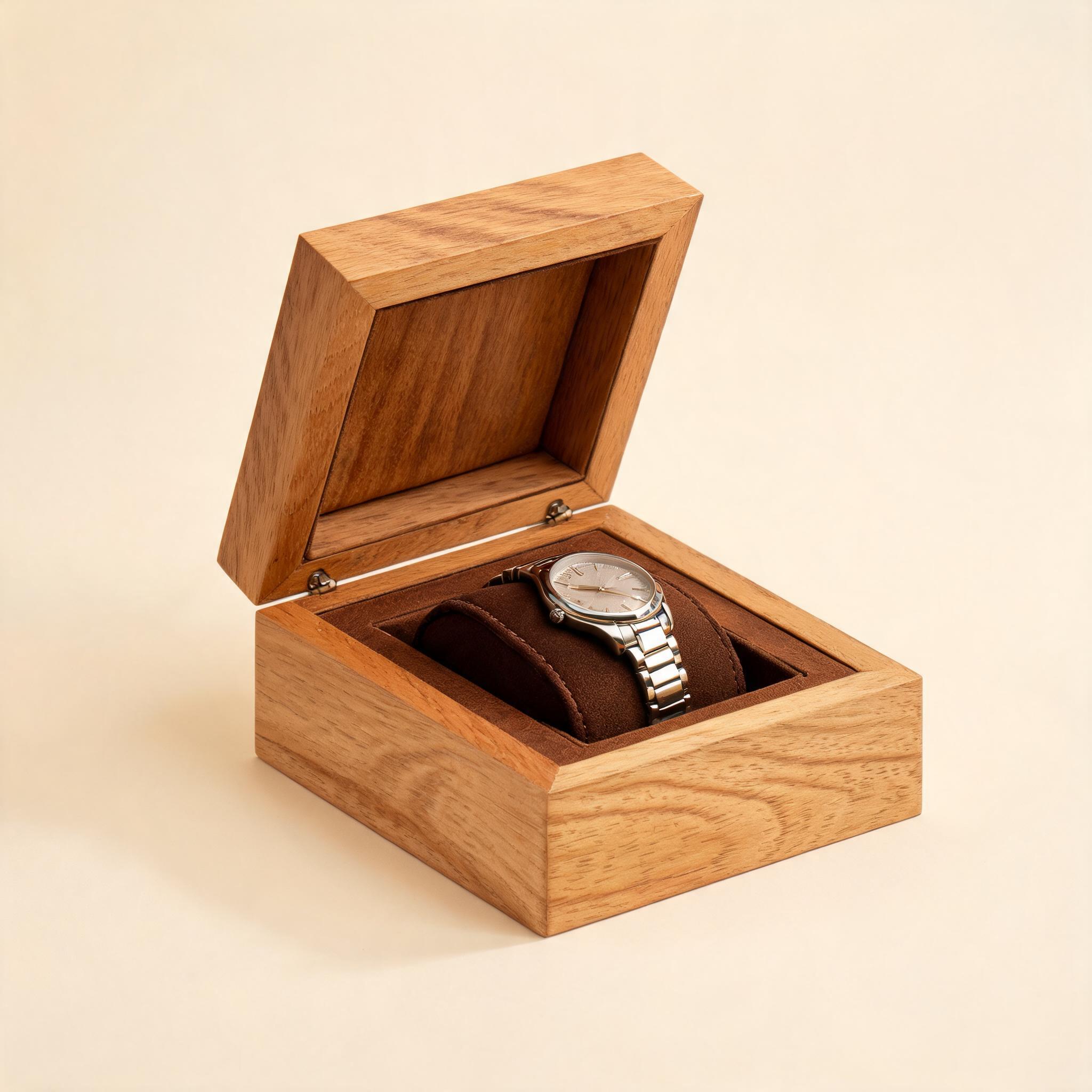
Small metal parts decide how the box feels to open — and whether it stays closed in transit.
Read more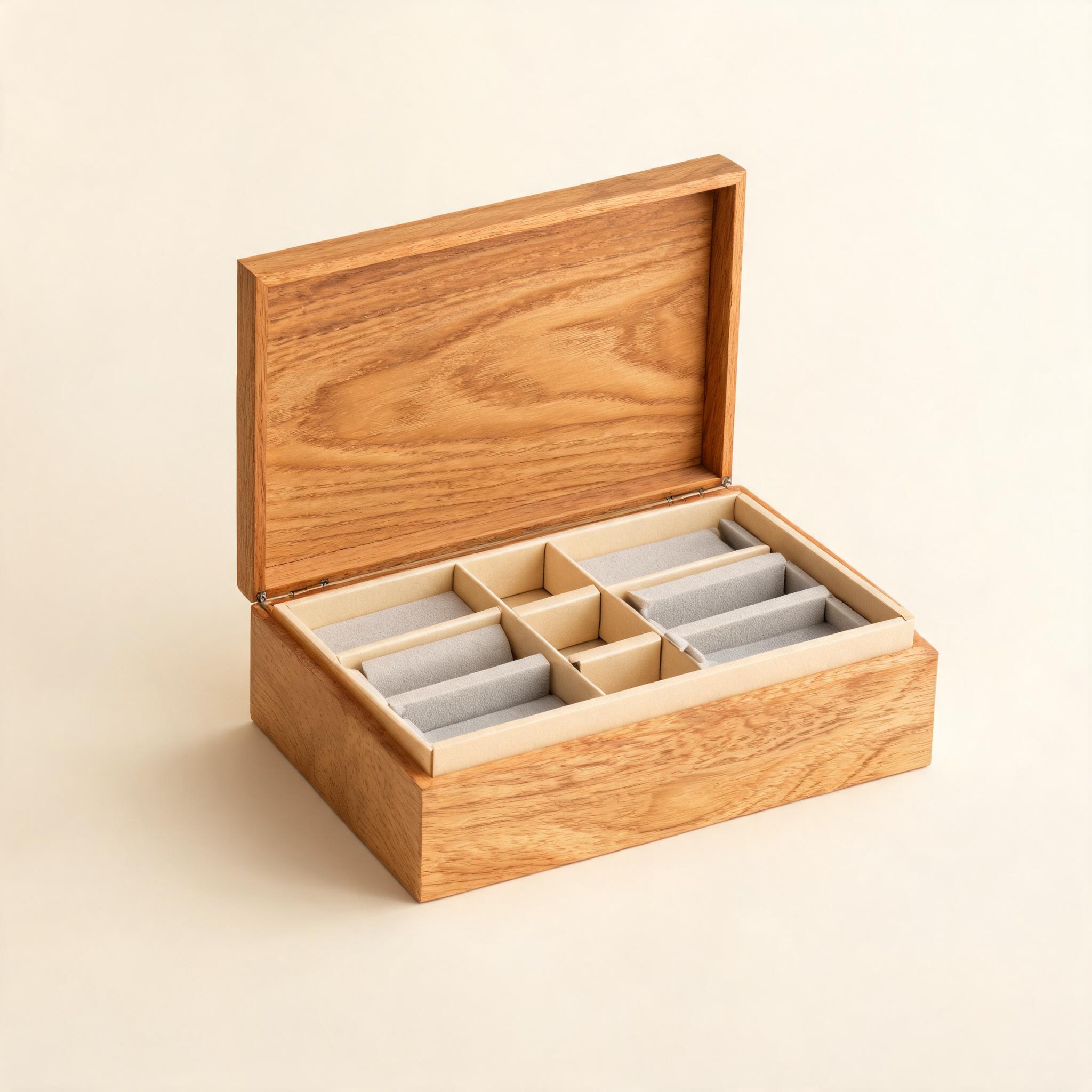
Foam, velvet or wooden inserts that hold every component exactly in place.
Read moreBack to the range
Send the brief — we'll come back with structure, material and finish options for interior compartments & inserts, plus a clear quotation.