
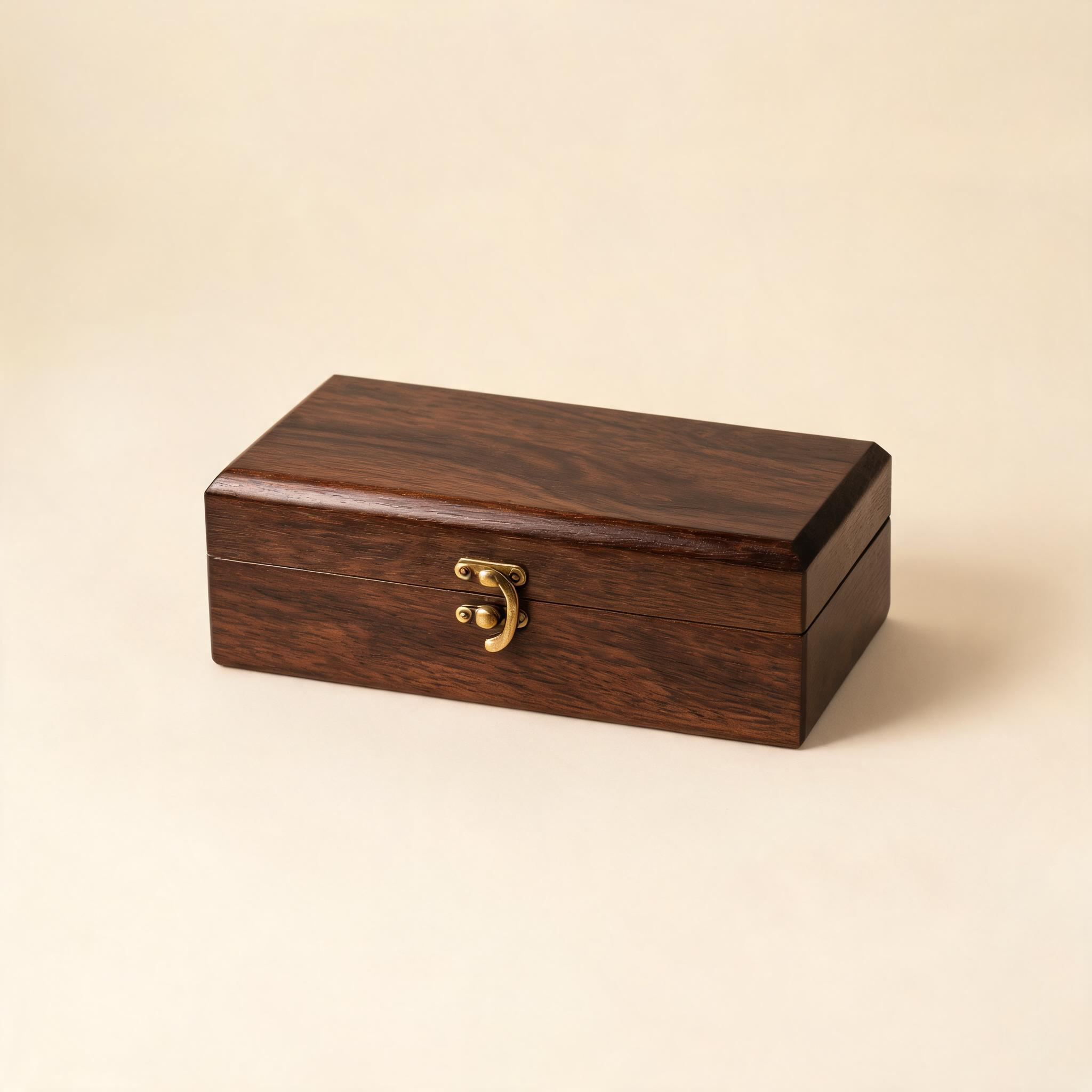
Luxury signals
- Heavier species — walnut, oak, acacia — for weight in the hand
- Soft-touch, satin or hand-polished surfaces
- Controlled lid resistance via hinge, magnet or ribbon
- Layered interiors that reveal the product in stages
Wooden Packaging
Weighted woods, soft-touch finishes and layered interiors for premium launches.
Luxury packaging is a set of signals rather than a single material: the weight in the hand, the softness of the surface, the sound the lid makes, the pause before the product appears. Wood carries all four, which is why premium brands keep coming back to it.
We build those signals deliberately — heavier species where weight matters, a soft-touch or satin finish on the exterior, and a layered interior that reveals the product in stages rather than all at once.
The brief behind it
Buyers cannot usually explain why one box feels expensive and another does not, but the reasons are consistent. Weight is the first signal: a box that is unexpectedly heavy in the hand suggests a product that is equally substantial. Surface is the second: a soft-touch or satin finish invites handling in a way that a gloss surface does not.
The third is the lid. A lid that lifts with a controlled resistance and settles closed on its own reads as engineered; a lid that rattles or needs force reads as cheap. The fourth is time — the length of the pause between opening the box and seeing the product. A layered interior creates that pause; a single cavity removes it.
All four can be specified. Weight comes from species and wall thickness, surface from coating, resistance from hinge or magnet choice, and the pause from the interior layout. This is why luxury packaging is a design exercise rather than a materials upgrade.
What you can specify
Every point below is developed with you and confirmed on a physical sample before production.
Send the product dimensions, an approximate quantity and the date you need it. We come back with structure, material and finish options — and a clear quotation.
Start a projectAt a glance
The six decisions that define this product. Change one and the cost, weight and lead time move with it.
Why it matters
These are the choices this page decides. Getting them right at the sampling stage is what keeps cost and rework out of production.
Discuss your projectWho buys this
The same product is specified very differently depending on who is buying it. These are the briefs we see most often.
How we run it
We are a sourcing and product development partner rather than a single factory. Your project is matched to a specialist workshop in our manufacturing network, and one team stays accountable for the drawing, the sample, the production schedule and the inspection before dispatch.
Your product, sketch or reference photo becomes a working drawing: internal dimensions, wall thickness, opening mechanism and insert layout, with the trade-offs priced.
Before a full sample is made, you compare species, stain and coating on physical boards under your own lighting — the fastest way to avoid a colour surprise.
A physical sample of the actual construction is made and shipped for approval. Nothing goes into a production run before you sign off on it.
The approved sample becomes the standard. We coordinate the schedule with the workshop best suited to the structure, material and quantity, and report progress.
Units are checked against the approved sample during and after production — dimensions, finish, hardware and branding — then packed for the shipping route.
Export cartons, packing lists and shipping documents are prepared against the agreed trade term, and the shipment is coordinated with your forwarder or delivered to the named port.
Common questions
Four things in sequence: weight, surface feel, the resistance of the lid and the pause before the product appears. Material cost is less decisive than getting those four right together.
Often yes. A lighter wood with a satin lacquer and a well-built interior reads premium at a fraction of a solid walnut cost. We show you the trade-offs on samples.
Yes — printed sleeves, dust bags and belly bands are developed with the box so the whole presentation is consistent.
It is more sensitive to handling than a matte or satin lacquer, and it can show fingerprints. Where the box will be handled in store, we usually recommend a satin finish instead.
Yes. Keep the construction and change the finish and interior — that is the cheapest way to build a tiered range that still looks related.
Foil sits on the surface and suits fine detail; a metal plate adds real depth but costs more. On dark woods a plate often reads better because the contrast is physical rather than printed.
Yes, for lighter lids. Magnets give a clean exterior and a satisfying close, but the wood tolerance has to be tighter and the lid size is limited.
Yes. Sourcing them with the box keeps colours and paper weights consistent, which is usually where a premium presentation loses coherence.
Related

Outer packaging engineered to your product's dimensions, weight and fragility.
Read more
Showcase-grade boxes engineered so the product lands the moment the lid opens.
Read more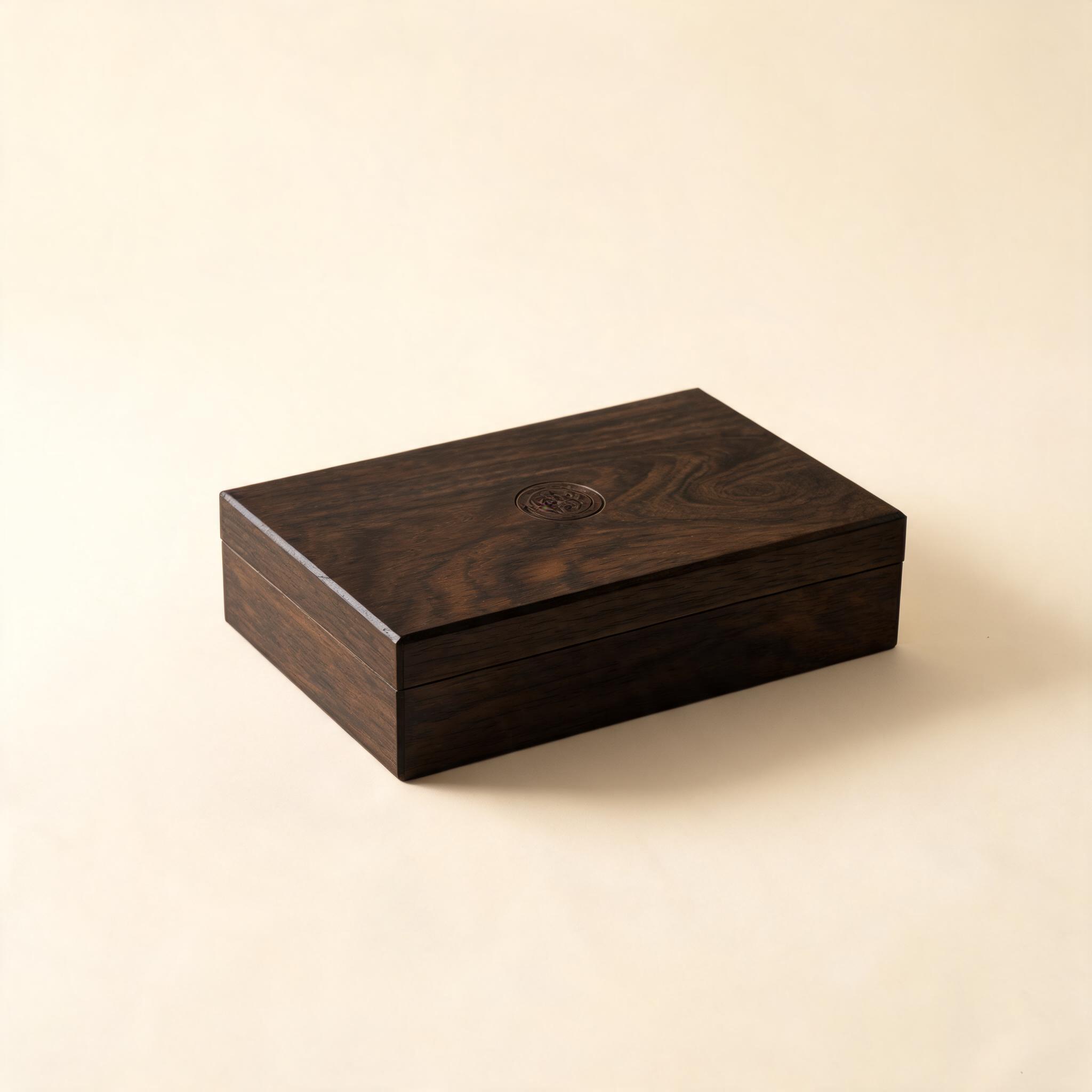
Engraving, foil, print or inlay — the technique decides whether the mark looks made for the material.
Read moreBack to the range
Send the brief — we'll come back with structure, material and finish options for luxury gift packaging, plus a clear quotation.